
The Impact of Solar Panels on Home Value in West Palm Beach
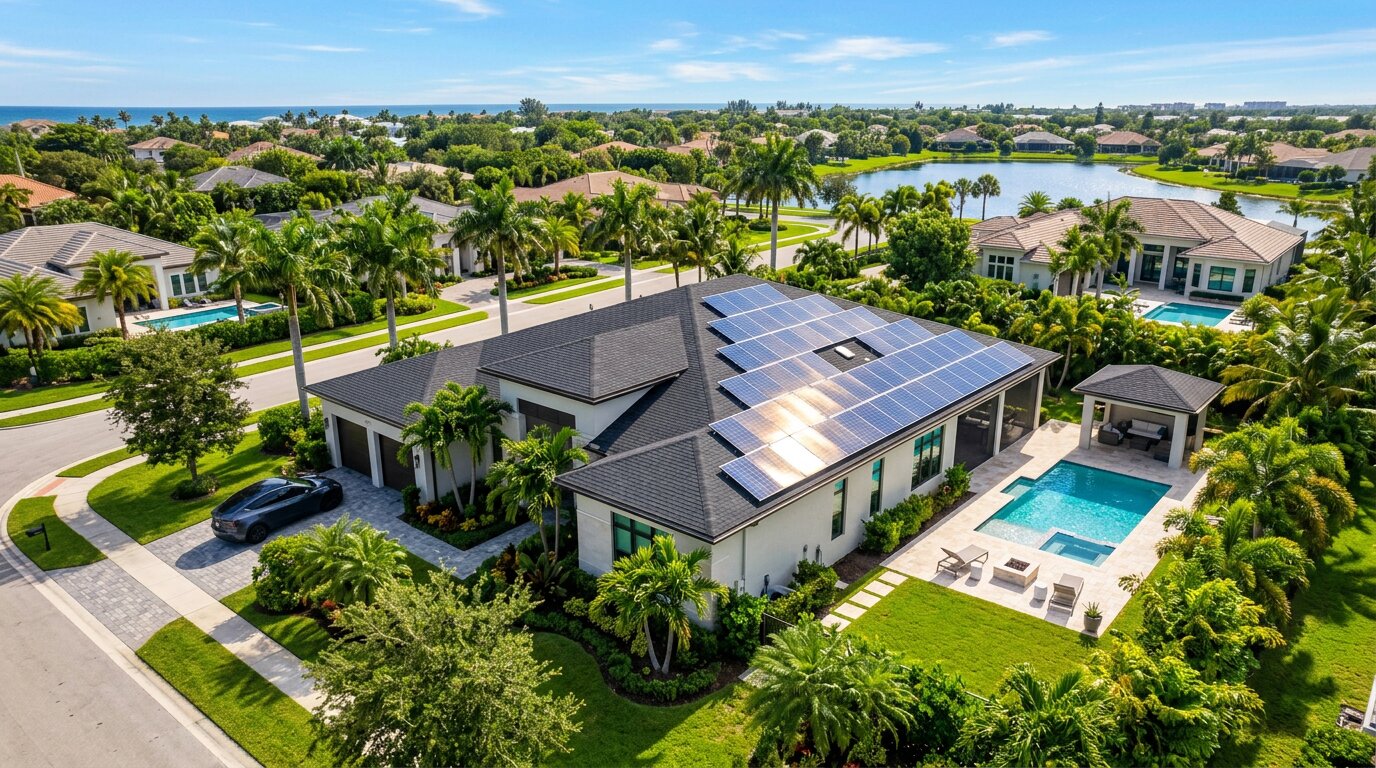
If you’re considering adding solar panels to your West Palm Beach home, you’ll want to know how it could affect your property’s value. As more homeowners in the area install solar, both market trends and buyer preferences are shifting. There’s more to weigh than just energy savings—local incentives, installation requirements, and real estate insights all play a part. Curious how these factors add up for your own investment?
Solar Energy Trends in West Palm Beach
How are homeowners in West Palm Beach adapting to the region's climate? With an average of 230 sunny days annually, solar panel installations have become more prevalent among residents.
As homeowners explore sustainable energy solutions, solar panel systems present tangible financial benefits for both buyers and investors. Florida's policies, including net metering, battery storage options, and federal tax incentives, contribute to the increasing attractiveness of solar energy.
The investment tax credit (ITC) allows homeowners to deduct a significant portion of their solar installation costs from federal taxes, while property tax exemptions help mitigate the financial burden associated with installation.
Additionally, homeowners can expect to see a reduction in utility bills, further easing their dependence on traditional electricity suppliers.
From a financial perspective, the cost of solar systems and the associated payback period typically make them a rational investment over time.
Moreover, numerous studies indicate that solar installations can enhance property value, often surpassing the initial capital expenditures. Such factors combine to position solar energy as a viable option for West Palm Beach residents seeking to invest in their homes while promoting sustainability.
Factors That Influence Solar’s Effect on Property Value
The impact of solar panels on property value in West Palm Beach is influenced by several important factors.
Firstly, national real estate trends indicate a growing preference for energy-efficient homes, which can enhance property appeal. Local incentives and relevant net metering policies also play a significant role; these can affect the financial viability of solar installations and their potential return on investment.
Homes with high energy consumption, a common characteristic in Florida due to climate conditions, tend to benefit significantly from solar energy savings, potentially leading to increased property value.
Furthermore, federal tax credits, such as the Investment Tax Credit (ITC), can reduce the initial costs associated with solar panel installation, making it a more attractive option for homeowners.
Additionally, prospective buyers are increasingly looking for sustainable features in properties, which include battery storage and the capability to sell excess power back to the grid. These attributes can enhance a home's marketability and value.
It is essential for homeowners to carefully assess financing options, the quality of solar panels, and prevailing electric rates to ensure that these investments are economically sound over the long term.
A well-informed approach can lead to a more favorable outcome regarding property value enhancement associated with solar energy systems.
Cost Considerations and Payback Period in Florida
The average upfront cost of solar panel installations in Florida is approximately $34,960. However, federal tax credits may reduce the initial investment to around $24,472, thereby improving accessibility for homeowners.
Florida's installation costs are generally below the national average, and with over 230 sunny days annually, solar panel systems can be a practical choice for many residents.
The average payback period for solar panel systems in the state is estimated to be around 11 years. This figure is influenced by savings on utility bills, net metering policies, and other available incentives.
Homebuyers and real estate professionals can explore various financing options and consumer guides to facilitate the transition away from fossil fuel dependence.
Over time, the financial benefits of solar energy installations are likely to surpass the initial costs.
Electricity Usage and Savings Potential for Homeowners
Energy consumption patterns are essential when evaluating the potential savings for homeowners in West Palm Beach who consider investing in solar panels. With an average monthly usage of 1,142 kWh and relatively high electric rates, the installation of solar panels can lead to a notable reduction or complete elimination of utility bills. Florida's climate, characterized by a considerable number of sunny days annually, supports consistent solar energy generation.
From a financial perspective, while the initial investment for solar panel systems can be substantial, the long-term savings on electricity bills often surpass these upfront costs. Additionally, advancements in battery storage solutions, such as those offered by companies like Solar Panels in West Palm Beach, further enhance the viability of solar energy by allowing homeowners to store excess energy generated during the day for use during peak hours or when the sun is not shining.
In terms of grid connectivity, net metering allows homeowners to receive credit for excess energy produced, which can contribute to overall savings.
Furthermore, incorporating a solar panel system may positively impact property value, making homes more appealing to potential buyers who prioritize energy efficiency and sustainability.
The Role of Incentives and Tax Benefits
The financial implications of installing solar panels in West Palm Beach are influenced significantly by various incentives and tax benefits. Notably, the federal Investment Tax Credit (ITC) provides a substantial 30% deduction on the cost of installation.
Additionally, Florida implements a property tax exemption for the increased value resulting from solar panel installations, which can further enhance the financial viability of such projects.
West Palm Beach's favorable climate, characterized by a high number of sunny days annually, further supports the decision to adopt solar energy. This aspect is recognized by potential buyers, businesses like Tesla, and real estate professionals who acknowledge the impact that solar installations can have on property value and utility savings.
Furthermore, options such as incentives for net metering and battery storage systems can contribute to reducing reliance on the electrical grid.
These factors combine to suggest that, despite the initial investment costs associated with solar panel installation, the long-term economic benefits may ultimately justify the expenditure.
Adopting solar energy in this context represents a pragmatic and environmentally sustainable choice.
Evaluating Roof Suitability and Installation Requirements
A solar panel installation in West Palm Beach begins with a comprehensive evaluation of your roof’s suitability. It is essential to assess whether the roof has the appropriate orientation and is free from significant shading to take full advantage of Florida’s abundant sunshine. Key factors to consider include the structural integrity of the roof, the potential costs associated with the installation, and the various solar panel options available from reputable companies such as Tesla.
Given the local climate, which includes the likelihood of storms and hurricanes, it is crucial to select durable solar systems designed to withstand these conditions.
Additionally, considerations such as battery storage solutions, financing options, applicable incentives (like the federal tax credit, or ITC), and any stipulations imposed by local homeowners' associations (HOAs) play a significant role in making informed installation decisions and determining the payback period for the investment.
The long-term benefits of solar energy systems can surpass the expense of utility bills and fluctuating electric rates, potentially enhancing the overall value of the property.
Thus, engaging in a detailed assessment and analysis of these factors is advisable for homeowners considering solar energy installation.
Market Demand and Real Estate Insights
In the current West Palm Beach housing market, solar panels are increasingly recognized as a valuable feature that can enhance both buyer interest and property value. Given Florida's favorable climate, the implementation of solar energy systems can contribute to a reduction in utility expenses, which is a significant consideration for many homeowners. Research indicates that properties equipped with solar panels may experience an increase in market value by approximately 4.1%.
For prospective buyers, the appeal of solar installations often includes various factors such as the potential for sustainable energy use, reduced electric rates, and benefits from net metering.
Additionally, federal tax incentives add to the financial considerations that make solar energy an attractive investment. Over time, the savings generated through decreased utility costs can offset the initial installation expenses, making solar systems a practical choice for homeowners looking to enhance the marketability and value of their property.
Considerations for Choosing a Solar Provider in West Palm Beach
Selecting a solar provider in West Palm Beach requires thorough research to ensure a prudent investment. Homeowners should verify the credentials and licenses of installation companies, as Florida's regulations govern solar installations closely.
It is advisable to compare financing options, available incentives, and warranties for solar panels; notable manufacturers such as Tesla and other national providers offer a range of plans.
When evaluating warranties, look for a 25-year panel guarantee paired with legitimate performance warranties. Understanding the implications of net metering policies from your electric provider is also crucial, as these can influence overall savings.
Review customer testimonials to gauge service quality and consider the potential impact of solar installation on property value and property taxes.
It is important to pose specific inquiries regarding aspects such as battery storage, the payback period for your investment, and the total installation costs.
While initial expenses may seem significant, the long-term savings derived from solar energy can frequently offset these costs, making it a worthwhile consideration for many homeowners.
Conclusion
When you consider solar panels for your West Palm Beach home, you're not just lowering energy bills—you're boosting your property’s value and making long-term investments in sustainability. With local incentives, evolving technology, and growing homebuyer demand, the benefits extend well beyond your immediate savings. Understanding installation needs, incentives, and market trends helps you make a sound choice. By adopting solar, you position your home favorably in a changing real estate landscape and contribute to a greener future.
Website design and maintenance by NatureServe 